Street Hogs Motor Club
Creating impactful aesthetic aswell as bold visual identity that resonate with brotherhood and the biker culture

Discovery phase
The Street Hogs Motor Club approached the project with a clear vision: to create a bold, fearless identity that reflected the club’s passion for motorcycles, brotherhood, and the open road. Through initial discussions, it became evident that their aesthetic should evoke toughness, camaraderie, and a rebellious edge (qualities inherent in biker culture). The mascot needed to symbolize strength and grit, while the typography should resonate with classic biker patch styles.
Ideation Development
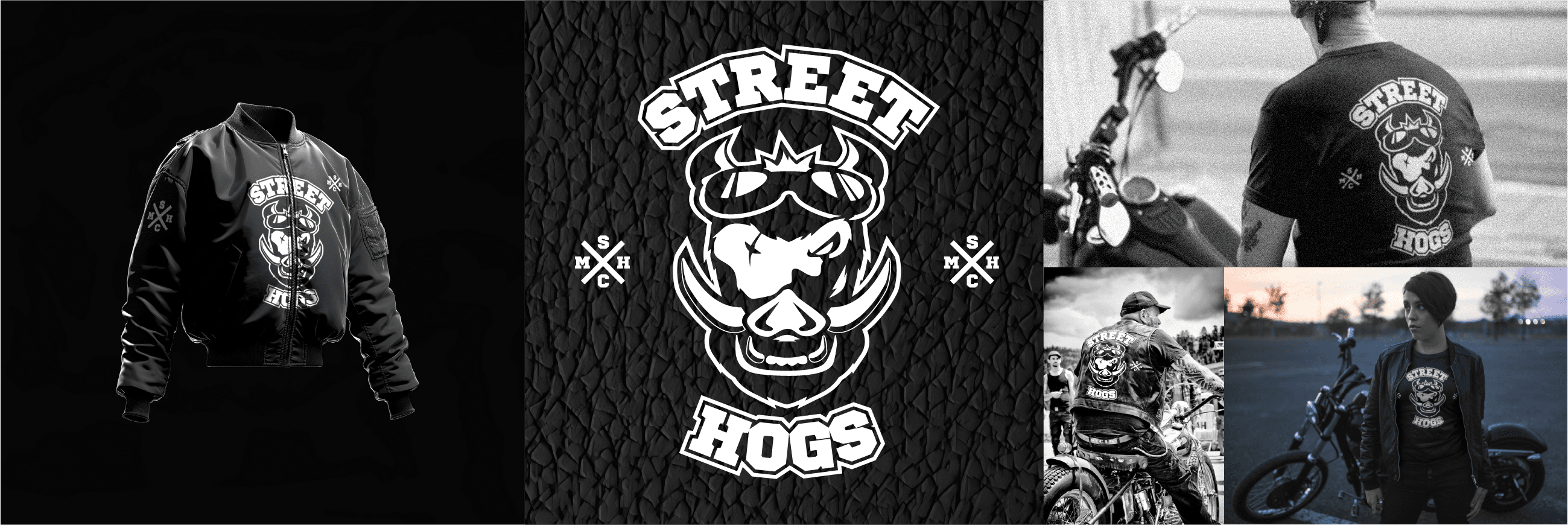
From early brainstorming, the warthog emerged as the perfect emblem, a creature known for resilience and raw strength. Sketches explored different expressions and stances, but the team gravitated toward a front-facing, aggressive snarl paired with aviator goggles and a crown-like mane, signifying leadership and swagger.
Early mood boards combined vintage biker insignias, black-and-white photography, and heavy block lettering to set the tone.
UX Research
The goal of the UX research phase was to understand the specific needs of a club community and translate its strong identity into a clear, functional, and engaging website. Three main personas: Prospective Member: a biker looking to join a structured motorcycle club. Needs to quickly understand the club’s values, rules, and how to apply. Active Member: already part of the club. Looks for practical information. Curious Visitor / Partner: a non-member seeking to understand who Street Hogs are and their legitimacy.
Constraints: Strong existing identity (codes, symbols, tone) that must not be diluted Community-driven content with limited text-heavy sections Mobile-first usage Balance between exclusivity and accessibility.
Prototype
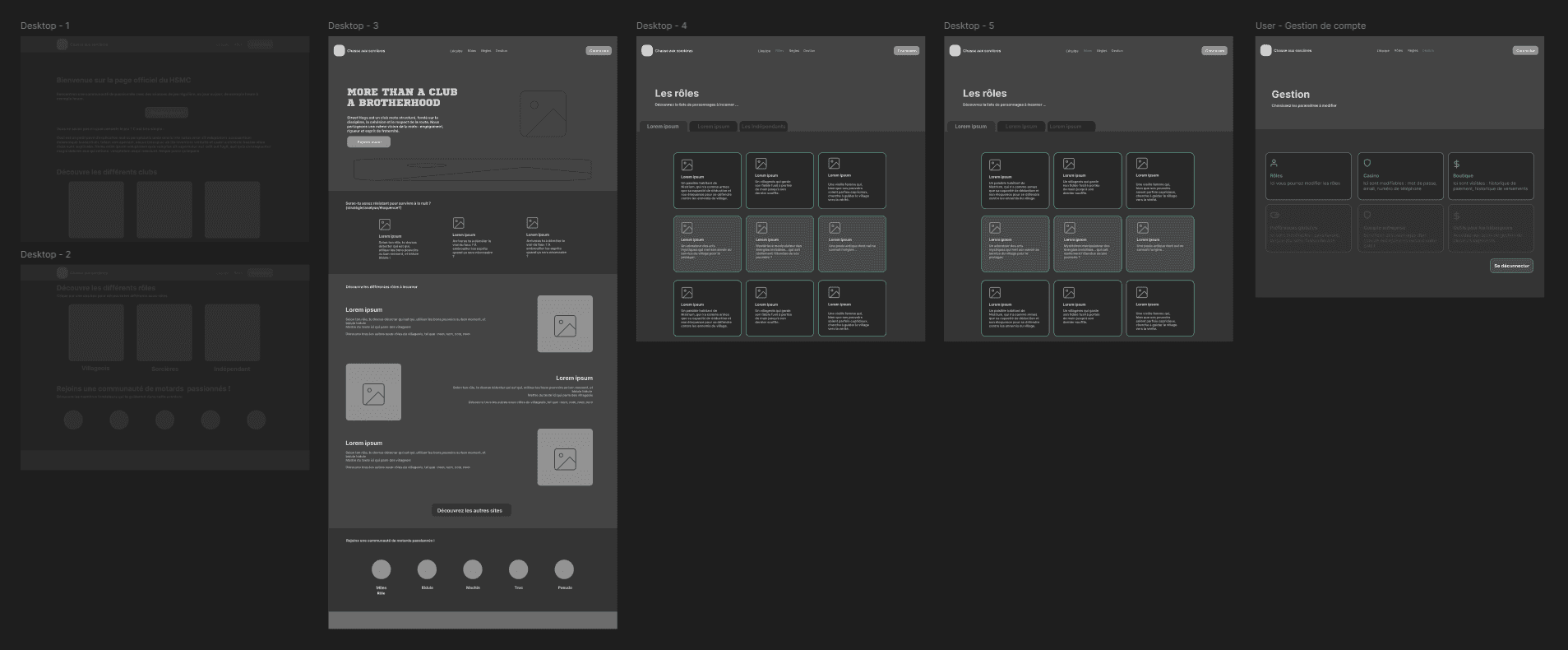
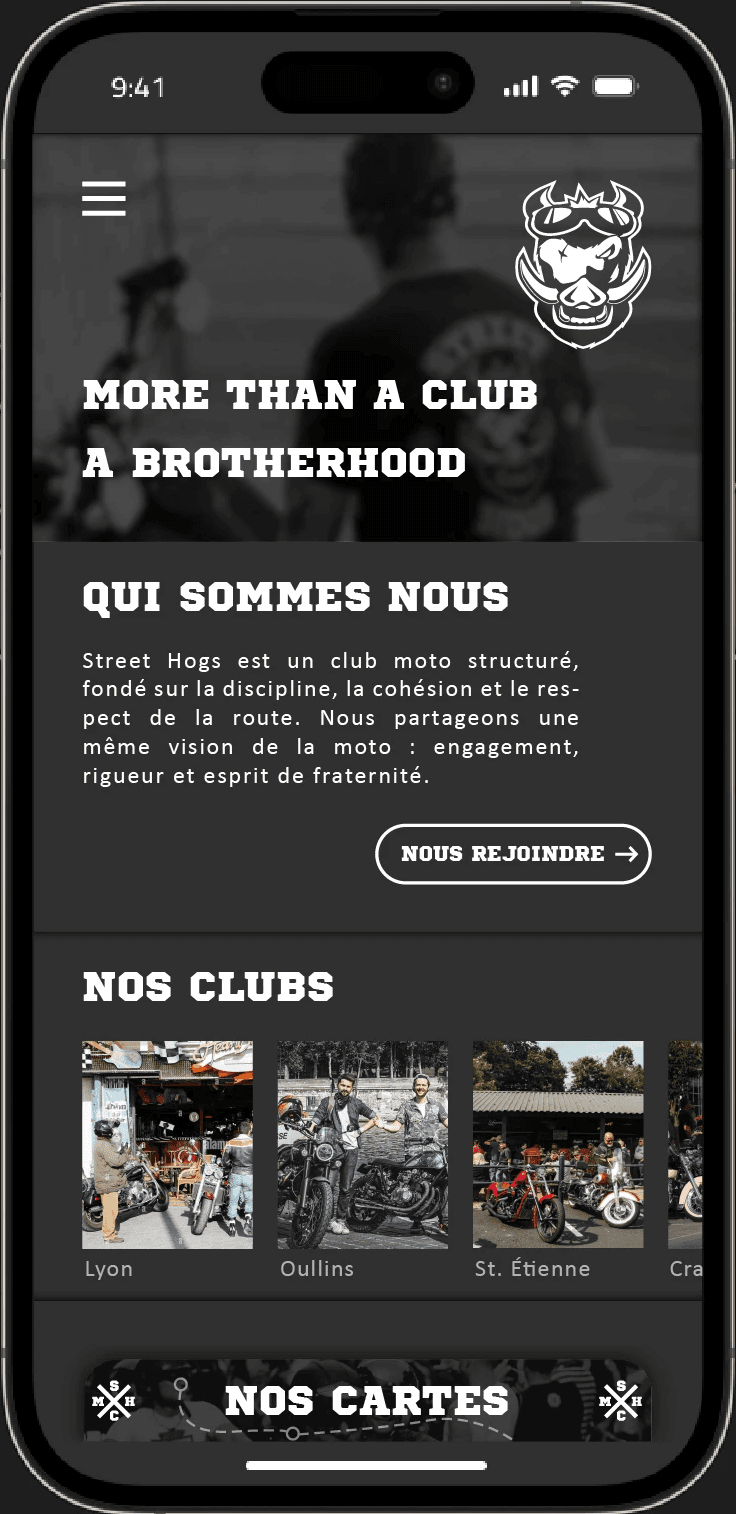
Low-fidelity wireframes were created first to validate structure and hierarchy without visual bias: Clear sectioning Strong CTAs visible early in the scroll Simple navigation accessible with one thumb on mobile Consistency across components ensures readability and reinforces trust.
I tested different scenarios using interactive prototypes: A mobile user navigates quickly between sections without cognitive overload. A member identifies their local chapter and accesses relevant content in seconds. By combining research-driven UX and a scalable design system the UI ensures a fluid journey.